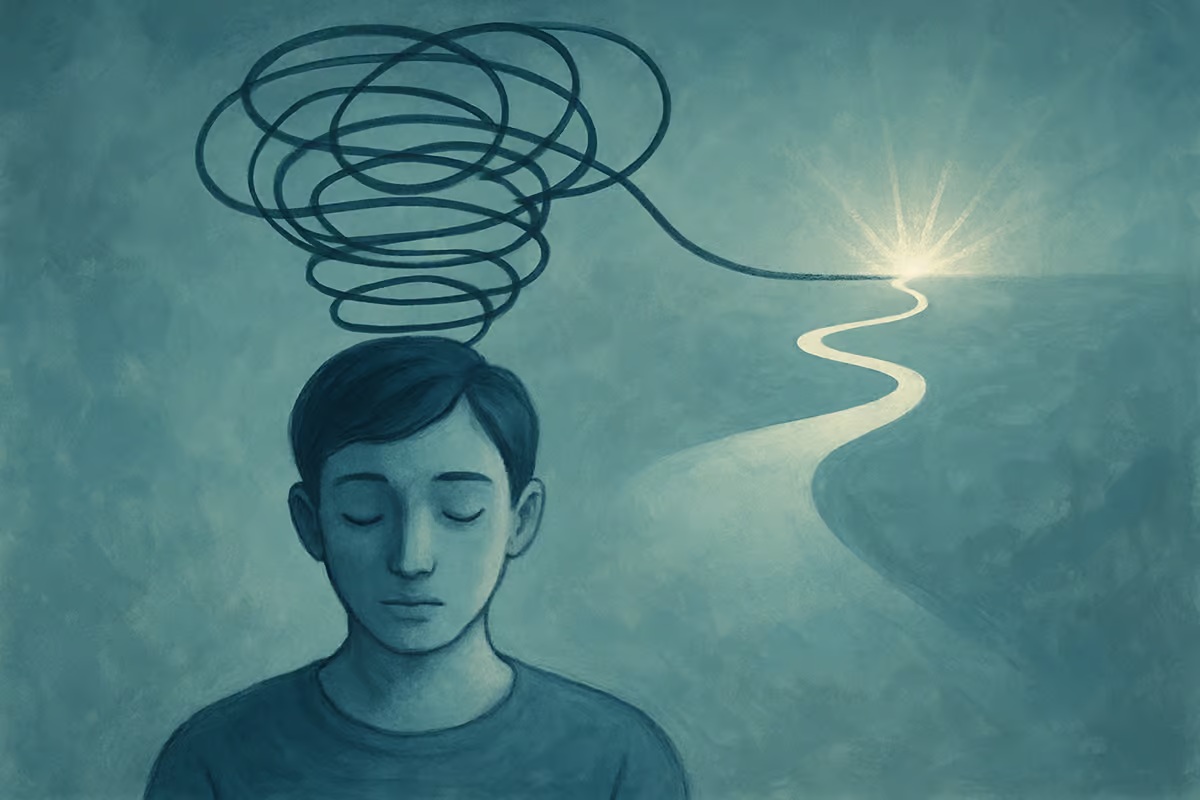
3 Ways to Interrupt an Anxiety Spiral
You’re fine one minute, and the next your mind is sprinting. A message goes unanswered, and suddenly you’re sure someone is upset with you. Your chest feels tight, and now you’re wondering whether something is wrong with your health. One worry leads to another, then another, until a small moment has turned into a full-blown catastrophe in your head.
That’s an anxiety spiral. It’s exhausting, it feels out of your control, and it can happen to anyone, whether or not you’ve been diagnosed with an anxiety disorder.
The good news is that spirals follow a pattern, and patterns can be interrupted. You don’t have to wait for the wave to crash on its own. Here are three practical, therapist-informed ways to slow an anxiety spiral and steady yourself, along with some guidance on when it’s time to get extra support.
1. Catch It Early and Name What’s Happening
Anxiety spirals gain speed the longer they go unnoticed. At the beginning, a spiral is just a thought. By the time it’s reached the “I can’t breathe and everything is falling apart” stage, it’s much harder to interrupt. That’s why the first skill is awareness: learning to recognize the early signals that a spiral is starting.
Early warning signs often include:
- “What if” thoughts that start stacking up
- A sudden jump from a small concern to a worst-case scenario
- A tight chest, clenched jaw, or knot in your stomach
- Restlessness or a strong urge to check, fix, or seek reassurance
- Difficulty focusing on anything else
Everyone’s pattern is a little different. Some people notice their body first, while others notice their thoughts racing. Paying attention to your own early signs gives you a head start.
Once you notice the spiral, try naming it. Say to yourself, silently or out loud, “I’m starting to spiral,” or “This is anxiety talking.” It may seem too simple to matter, but labeling an emotional experience creates a small amount of distance between you and it. Instead of being swallowed by the thoughts, you become the person observing them. Psychologists often describe this as shifting from being in the storm to watching the storm.
It can also help to identify the type of thinking you’re caught in. Anxious minds tend to rely on a few familiar patterns:
- Catastrophizing: jumping to the worst possible outcome
- Mind reading: assuming you know what someone else is thinking
- Fortune telling: predicting that things will go badly
- Black-and-white thinking: seeing situations as either perfect or a disaster
Naming the pattern, such as “I’m catastrophizing again,” takes away some of its authority. A thought that feels like a fact starts to look more like a habit of the anxious mind.
Finally, give yourself permission to pause. You don’t have to solve the problem your mind is presenting. Try telling yourself, “I don’t need to figure this out right now.” Interrupting a spiral isn’t about winning an argument with your anxiety. It’s about refusing to follow it any further down the staircase.
2. Calm Your Body to Calm Your Mind
Anxiety is not just a mental experience. When your brain senses a threat, whether it’s real or imagined, your body responds with the fight-or-flight reaction. Your heart rate climbs, your breathing becomes shallow, your muscles tighten, and stress hormones flood your system.
Here’s the catch: when your body is in alarm mode, the part of your brain responsible for logic and perspective has less influence. That’s why reassurance and rational thinking so often fail in the middle of a spiral. It’s usually more effective to calm the body first, then work with the thoughts.
Lengthen your exhale. Slow breathing with longer exhales activates the parasympathetic nervous system, the body’s natural “rest and settle” response. Try breathing in through your nose for four counts and out through your mouth for six to eight. Repeat for two to five minutes. If counting is distracting, simply aim to make each out-breath slower than the in-breath.
Ground yourself in the present moment. Spirals pull your attention into the future, where your fears live. Grounding brings you back to the here and now. A well-known option is the 5-4-3-2-1 technique: notice five things you can see, four you can feel, three you can hear, two you can smell, and one you can taste. You can also feel your feet on the floor, rest your hands on a firm surface, or slowly describe the room around you.
Release tension on purpose. Try progressive muscle relaxation by tightening one muscle group for a few seconds, then letting go. Work from your hands to your arms, shoulders, face, and legs. Even unclenching your jaw and lowering your shoulders sends your body a message that it’s safe to stand down.
Get moving. A brisk walk, gentle stretching, or even shaking out your hands and arms can help burn off stress energy. Anxiety often leaves your body feeling charged up with nowhere to go, and movement gives that energy somewhere to land.
Support the basics. An under-rested, under-fed body is more vulnerable to anxiety. Regular meals, steady hydration, limiting caffeine, and protecting your sleep all make spirals less likely to start and easier to stop.
The aim isn’t to erase anxiety completely. It’s to bring the intensity down enough that you can think a little more clearly. Think of it as turning down the volume so you can hear yourself again.
3. Shift Your Focus and Take One Small Step
Once your body has settled a bit, the final step is to redirect your attention and energy. Anxiety thrives on rumination, the endless turning over of the same worries. The longer your mind circles, the more convincing the worst-case scenarios feel. Breaking that loop means giving your brain something else to do.
Engage your mind in something absorbing. Choose an activity that takes enough focus to compete with the spiral. That might be cooking, tidying one small space, doing a puzzle, drawing, listening to an engaging podcast, or calling someone you trust and talking about something other than your worry. The goal isn’t to run away from your feelings. It’s to give your mind a break from a cycle that isn’t helping.
Ask balanced questions. After the intensity has eased, you can gently check the story your anxiety is telling:
- What is the evidence for this thought, and what is the evidence against it?
- What is the most likely outcome, not just the scariest one?
- What would I say to a friend in this situation?
- What is within my control, and what isn’t?
- Will this matter a month from now?
You’re not trying to force positivity. You’re looking for a more balanced thought, such as “I don’t know how this will turn out, but I can handle whatever happens.”
Choose one small action. Spirals make problems feel huge and shapeless. Breaking them down restores a sense of control. Ask yourself, “What is one small thing I can do right now?” It might be writing down what’s worrying you, replying to a message, scheduling a call, or deciding to revisit the issue tomorrow after you’ve slept. Small actions send your brain an important message: you’re not powerless.
Try a “worry window.” If you spiral often, set aside ten to fifteen minutes each day to write out and think through your worries. When anxious thoughts pop up outside that time, jot them down and tell yourself you’ll deal with them during your window. Over time, this helps your mind learn that it doesn’t have to solve everything immediately.
Reach out. Talking to someone you trust can take the air out of a spiral. Saying your fears out loud often makes them feel smaller and reminds you that you’re not alone.
When to Seek Professional Support
These strategies work best with practice, ideally before you’re in the middle of a spiral. Still, tools have limits, and there’s no shame in needing more support. It may be time to talk with a therapist if:
- Spirals happen frequently or last for long stretches
- Your worry feels uncontrollable or out of proportion to the situation
- Anxiety is disrupting your sleep, work, relationships, or physical health
- You’re avoiding places, people, or activities because of fear
- You’ve tried to manage it on your own and still feel stuck
Anxiety is highly treatable. Therapy approaches such as cognitive behavioral therapy (CBT), mindfulness-based strategies, and nervous system regulation skills can help you understand your triggers, change the patterns that fuel spirals, and build lasting confidence.
*If you ever feel overwhelmed to the point of having thoughts of harming yourself, please call or text 988 to reach the Suicide & Crisis Lifeline, or call 911 in an emergency.*
You don’t have to spiral alone. Anxiety spirals can feel frightening, but they aren’t a sign that something is wrong with you. They’re a sign that your mind and body are working overtime to keep you safe. With the right tools and support, you can learn to catch them sooner, calm them faster, and have fewer of them over time.
At Rochester Therapy Center, our therapists help people understand their anxiety and build personalized strategies for managing it. If you’re tired of being pulled into the spiral, reach out today to schedule an appointment. Relief is possible.