Health Anxiety and Finding Relief: Understanding Your Nervous System and Knowing When to Seek Support
If you’ve ever felt a strange sensation in your body and immediately jumped to the worst possible explanation, checked a symptom online only to spiral through a list of alarming possibilities, or found yourself unable to relax until a doctor confirmed nothing was wrong, you’re not alone. These experiences are common, and they often point to an anxious nervous system working overtime, sometimes in ways that are easy to misunderstand.
Below, we’ll look at how health anxiety develops, what it actually means to calm an overactive nervous system, what to expect if you decide to try therapy, and how to know if it’s time to reach out for support.
Health Anxiety: Why Every Symptom Can Start to Feel Like Something Is Wrong
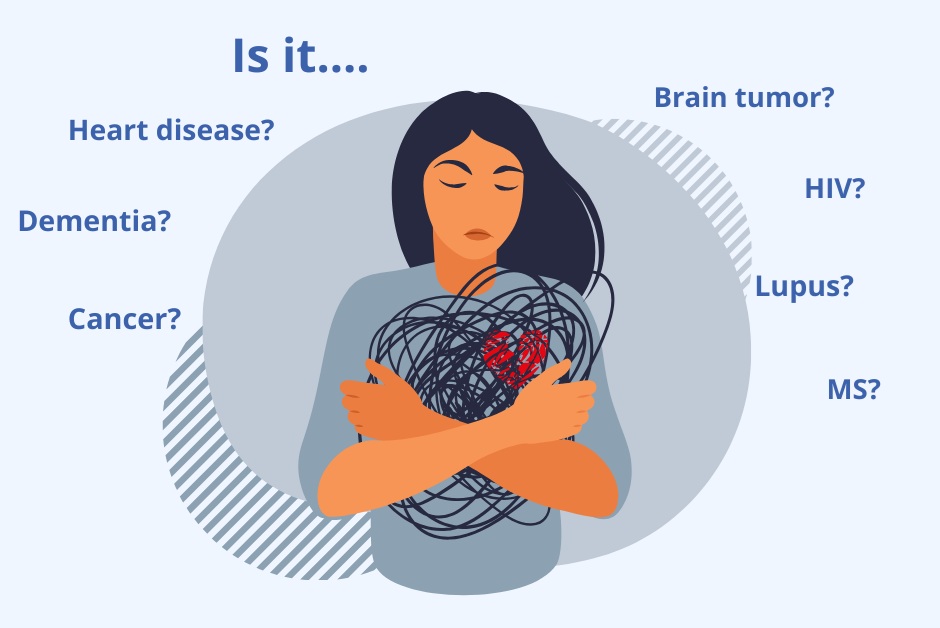
Health anxiety, sometimes called illness anxiety, involves a persistent and excessive worry about having or developing a serious medical condition. It’s more than the occasional concern everyone experiences when something feels off. For someone with health anxiety, a headache might immediately trigger thoughts of a brain tumor. A racing heart might spiral into fear of a heart attack. A stomachache might set off hours of researching symptoms and diagnoses.
What makes health anxiety particularly difficult is that it often becomes self-reinforcing. Anxiety itself produces physical symptoms: a racing heart, muscle tension, stomach discomfort, dizziness, fatigue. For someone prone to health anxiety, these anxiety-driven symptoms can easily be mistaken for signs of a medical problem, which increases anxiety further, which then intensifies the physical symptoms. The cycle can continue indefinitely without an underlying medical cause ever being found.
Common patterns associated with health anxiety include:
- Frequently checking the body for symptoms, lumps, or changes
- Researching symptoms online and fixating on worst-case outcomes
- Seeking frequent reassurance from doctors, family, or friends
- Avoiding medical information, appointments, or health-related conversations out of fear
- Difficulty feeling reassured, even after a normal test result or a doctor’s confirmation that nothing is wrong
- Interpreting normal bodily sensations as signs of serious illness
It’s worth noting that health anxiety doesn’t mean someone is imagining their symptoms. The physical sensations are real. What differs is the interpretation of those sensations and the level of fear attached to them. Someone without health anxiety might notice a headache and think little of it. Someone with health anxiety might experience the same headache and feel certain something is seriously wrong.
Health anxiety can be exhausting, both for the person experiencing it and for the people around them who may be asked repeatedly for reassurance. The good news is that it’s a well-understood and treatable condition, often responding well to therapy approaches that address both the anxious thought patterns and the nervous system’s heightened alert state.
How to Calm an Overactive Nervous System When You Feel Anxious
At the root of health anxiety, and most forms of anxiety, is a nervous system that has become overly sensitive to perceived threats. Understanding this can be genuinely helpful, because it shifts the goal from “stop worrying” (which rarely works on command) to “calm the body,” which is often a more achievable and effective starting point.
When the nervous system perceives a threat, real or not, it activates the body’s stress response: heart rate increases, muscles tense, breathing becomes shallow, and the mind shifts into a heightened, scanning state. This response is useful in genuinely dangerous situations, but for someone with anxiety, it can activate frequently, even when there’s no real danger present.
Calming an overactive nervous system usually involves working with the body directly, rather than relying solely on rational thought to talk yourself out of anxiety. Some effective strategies include:
Slow, deliberate breathing. Long, slow exhales activate the parasympathetic nervous system, the body’s natural calming response. Breathing in for four counts and out for six or eight counts can help signal to the body that it’s safe.
Grounding techniques. Bringing attention to the five senses, naming things you can see, hear, feel, smell, and taste, can interrupt a spiraling thought pattern and bring the mind back to the present moment.
Movement. Physical activity, even something as simple as a walk, helps metabolize stress hormones and can reduce the physical intensity of anxiety.
Progressive muscle relaxation. Deliberately tensing and then releasing muscle groups throughout the body can help release physical tension that builds up during anxious periods.
Consistent sleep and nutrition. An overtired or under-nourished body is more vulnerable to anxiety, so basic self-care plays a bigger role in nervous system regulation than people often expect.
Limiting reassurance-seeking behaviors. While it may feel counterintuitive, constantly researching symptoms or seeking repeated reassurance often reinforces anxiety rather than resolving it. Gradually reducing these behaviors, ideally with support, can help retrain the nervous system over time.
These strategies won’t eliminate anxiety instantly, but with consistent practice, they can help reduce how often the nervous system activates and how intense that activation feels when it does happen.
Anxiety Therapy in Rochester, MN: What to Expect From Your First Appointment
Deciding to start therapy can feel like a big step, and not knowing what to expect can sometimes make that step feel even harder. If you’re considering anxiety therapy in Rochester, MN, here’s a general idea of what the process typically looks like.
Your first appointment is usually focused on gathering information rather than diving straight into treatment. Your therapist will likely ask about what’s bringing you in, how long you’ve been experiencing symptoms, how anxiety is affecting your daily life, and any relevant history, including previous mental health treatment, medical conditions, or significant life events. This isn’t an interrogation. It’s an opportunity for your therapist to understand your unique experience so they can tailor treatment to fit your needs.
You’ll also have the chance to ask questions of your own. This might include asking about your therapist’s approach and experience with anxiety, how they typically structure sessions, and what treatment might look like moving forward.
Many people feel some nervousness before their first therapy appointment, which is completely normal, especially for someone who already struggles with anxiety. A good therapist will understand this and work to make the first session feel as comfortable and low-pressure as possible.
From there, treatment often involves a combination of approaches, which may include cognitive behavioral therapy to address anxious thought patterns, mindfulness-based strategies to build present-moment awareness, and nervous system regulation techniques to reduce the physical intensity of anxiety. Sessions are typically collaborative, with your therapist helping you build tools and identify patterns, rather than simply telling you what to do.
Progress with anxiety therapy is usually gradual rather than immediate, but many people begin noticing shifts in how they relate to their anxious thoughts and physical symptoms within the first several weeks of consistent treatment.
Do I Need Therapy for Anxiety? 8 Signs It May Be Time to Talk to Someone
It’s not always obvious when anxiety has crossed the line from manageable stress into something that warrants professional support. Here are eight signs that it may be time to talk with a therapist:
1. Anxiety is interfering with daily functioning. If worry is making it difficult to work, maintain relationships, or complete everyday tasks, that’s a significant indicator that additional support could help.
2. Physical symptoms are frequent or intense. Regular headaches, stomach issues, muscle tension, or fatigue tied to anxiety are worth addressing, both to rule out other causes and to reduce the anxiety driving them.
3. You’re avoiding things because of anxiety. Skipping social events, avoiding certain places, or turning down opportunities specifically because of worry or fear is a sign anxiety has started to shrink your life.
4. Reassurance doesn’t stick. If you find yourself needing constant reassurance, from doctors, loved ones, or repeated research, but never feel settled, that’s a pattern therapy can help address.
5. Sleep is regularly disrupted. Difficulty falling asleep, staying asleep, or waking up with racing thoughts on a regular basis is both a symptom and a driver of worsening anxiety.
6. You feel irritable or on edge more often than not. As discussed in some of our previous posts, irritability is a common but often overlooked symptom of anxiety.
7. Your worry feels disproportionate to the situation, and you know it. Recognizing that your anxious response doesn’t match the actual level of risk, but feeling unable to stop it, is a common and treatable experience.
8. This has been going on for a while. Anxiety that persists for weeks or months, rather than resolving on its own, tends to respond well to professional support and often doesn’t improve significantly without it.
If several of these resonate with you, that’s meaningful information, not a diagnosis, but a strong signal that talking with a professional could help.
Taking the Next Step
Health anxiety, an overactive nervous system, and persistent worry can all feel isolating, but they are common experiences with well-established, effective treatment options. You don’t have to keep managing this on your own, and you don’t need to wait until things feel unbearable to reach out.
At Rochester Therapy Center, our therapists specialize in helping people understand and manage anxiety in all its forms, from health-related worry to nervous system dysregulation to the everyday overwhelm that builds over time. Reach out today to schedule an appointment and take the first step toward feeling more grounded.
Do you have an idea on an upcoming blog topic? Send us an email with your idea at admin@rochestertherapycenter.com